
By Kayleigh Warren
There is a special feeling, hiking into the gypsum hills of southeastern New Mexico in early June – and it’s not just from the early summer rainstorms on the horizon. These pale, crunchy soils are home for several New Mexico rare plants, including Amsonia tharpii (Tharp’s blue star). This species belongs to the Apocynaceae (dogbane) family, and is found only within Eddy County in New Mexico and just across the state border in adjacent Pecos County, Texas. A small range and specialization to a specific soil type are two of the features which make this plant ‘rare’. They also factor into the protocols botanists utilize to track its health, growth, and conservation needs.
As this year’s Jill and Stanley Jankowski Science and Conservation intern, I joined this year’s collaborative effort to conduct annual monitoring of Amsonia tharpii (Tharp’s blue star) at long-term demographic plots within the species’ range. Rare plant monitoring often entails the installation of these permanent plots, so that botanists can definitively visit the same areas each year and track changes over time. Visiting these plant populations annually can be especially important for species like Amsonia tharpii, which exhibit an adaptation that enables them to enter periods of dormancy – making it easy to underestimate their population sizes.
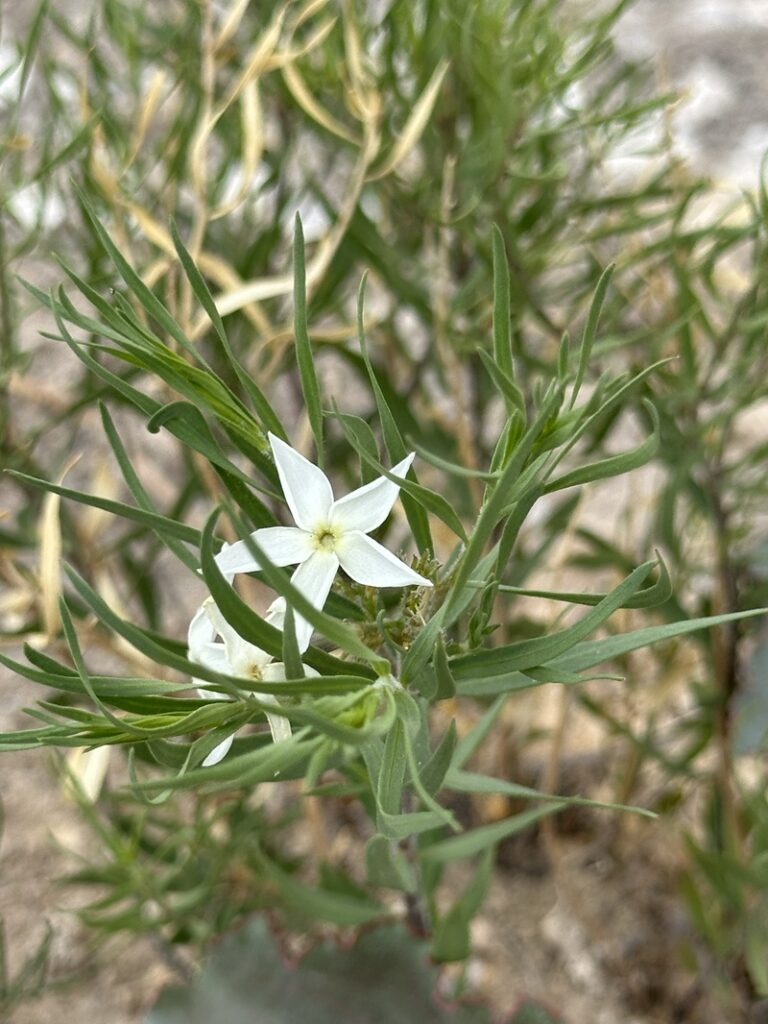
Amsonia tharpii in bloom!
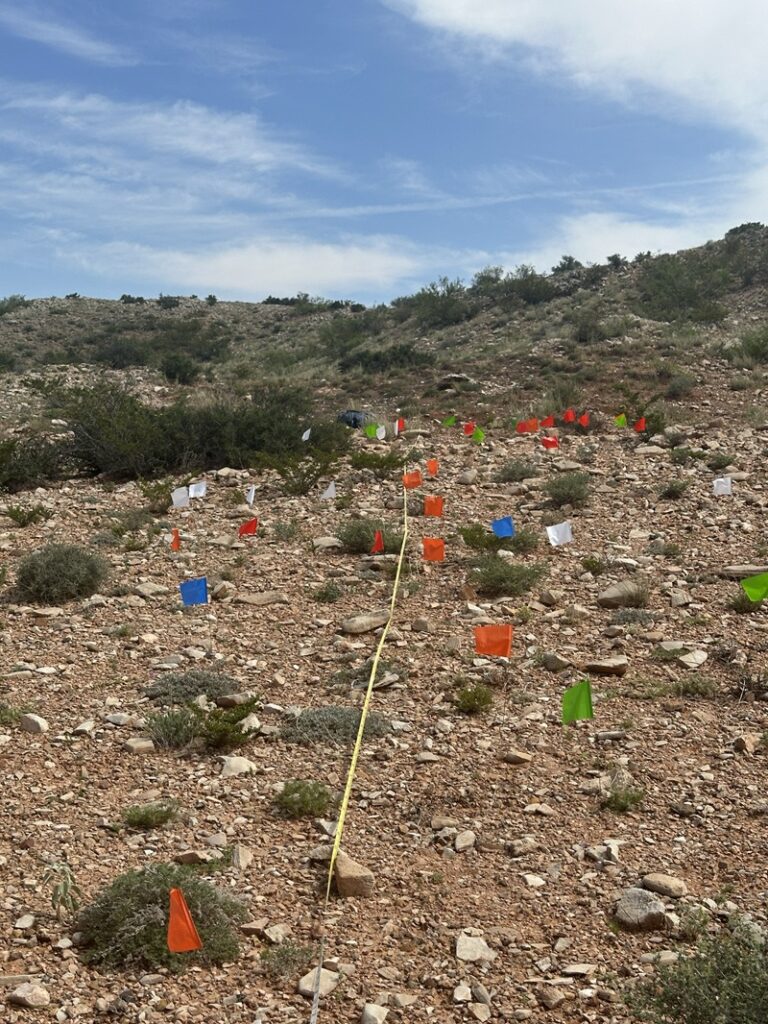
Flags along a transect tape mark the spots where plants have been present in previous years. During annual monitoring, botanists visit these precise locations and collect data on each plant’s phenology, health, and reproduction.
The yearly monitoring of Amsonia tharpii is led by New Mexico Bureau of Land Management Plant Conservation Program and brings together staff and interns from state departments, federal agencies, and non-profit organizations like the Santa Fe Botanical Garden to work together to count plants and record demographic data at numerous long-term monitoring sites. It’s a group effort – not just to help one another navigate long days and detailed protocols, but also to analyze data and translate what is learned into action for conservation. One of the primary objectives of the Santa Fe Botanical Garden’s Science and Conservation Program is to contribute to efforts like annual rare plant monitoring, and to be a partner in our vibrant and collaborative local community of plant conservation agencies and initiatives. As rare plants face the many changes and challenges surrounding them, they need us to work together to be a strong ally in their corner.
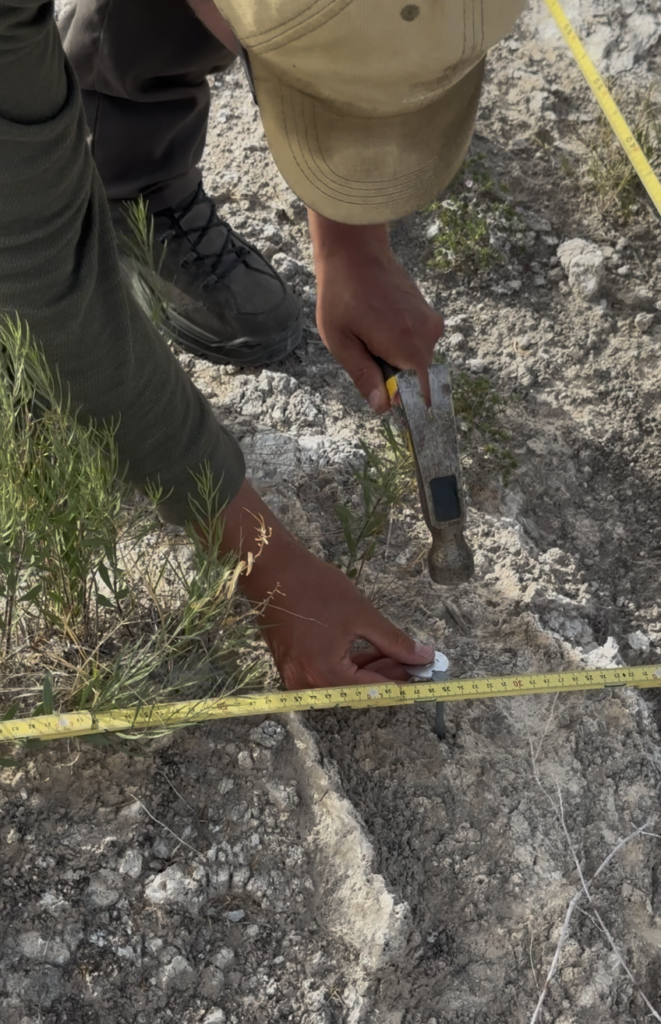
Installing a new tag next to a baby Amsonia plant. Welcome to the demographic monitoring plot, tiny friend!
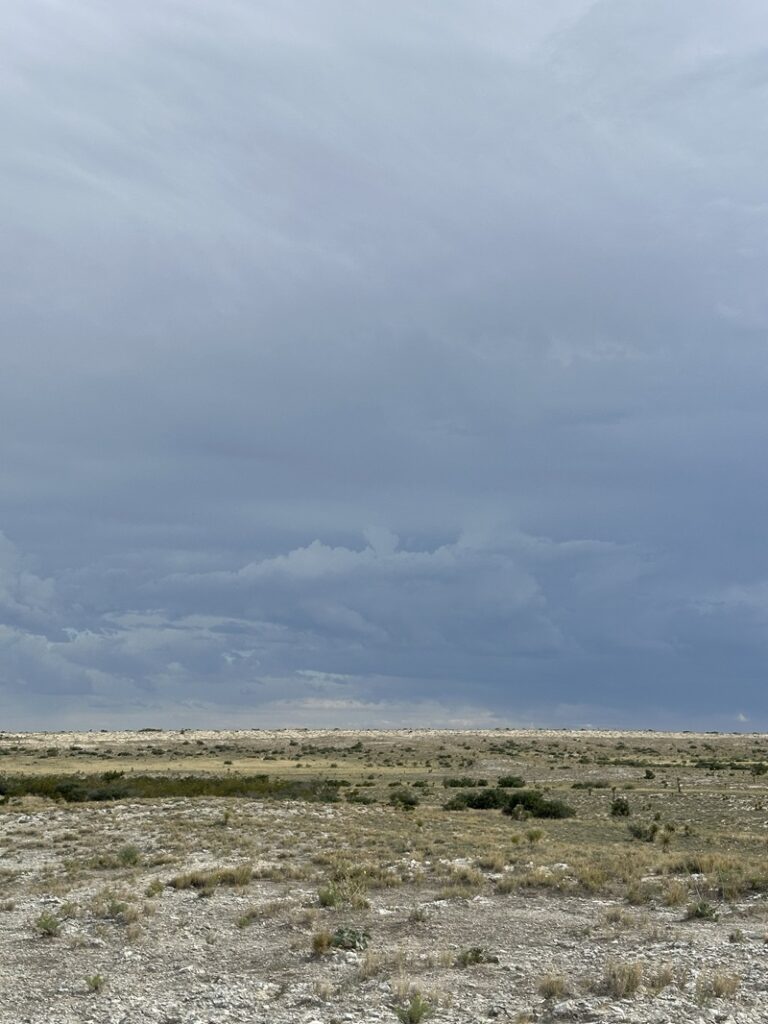
The welcome sight of a summer rainstorm rolling in over the gypsum hills.