
Scientific name: Tetraneuris argentea Greene
Common name: perky sue
Family: Asteraceae
Article by Monica Harmon and Linda Churchill.
Photos by Linda Churchill.
March and April can be a little drab in the Northern New Mexico landscape. The sparkle of winter snow is mostly gone (or, like this year, has barely made an appearance) and the plants that evolved here in the erratic spring weather of steppe and mountain are still hunkered down waiting for solidly warm temps and longer days. Some plants have started to green up, and the introduced fruit trees and crabapples are often in full bloom by April, but there’s little color in the native landscape and along the roadways.
But wait: what are those tiny notes of electric yellow beaming up to you from the ground? How can you not admire such bright fortitude in these drab windy days? The plant is, of course, our native perky sue (Tetraneuris argentea), cheery harbinger of spring.
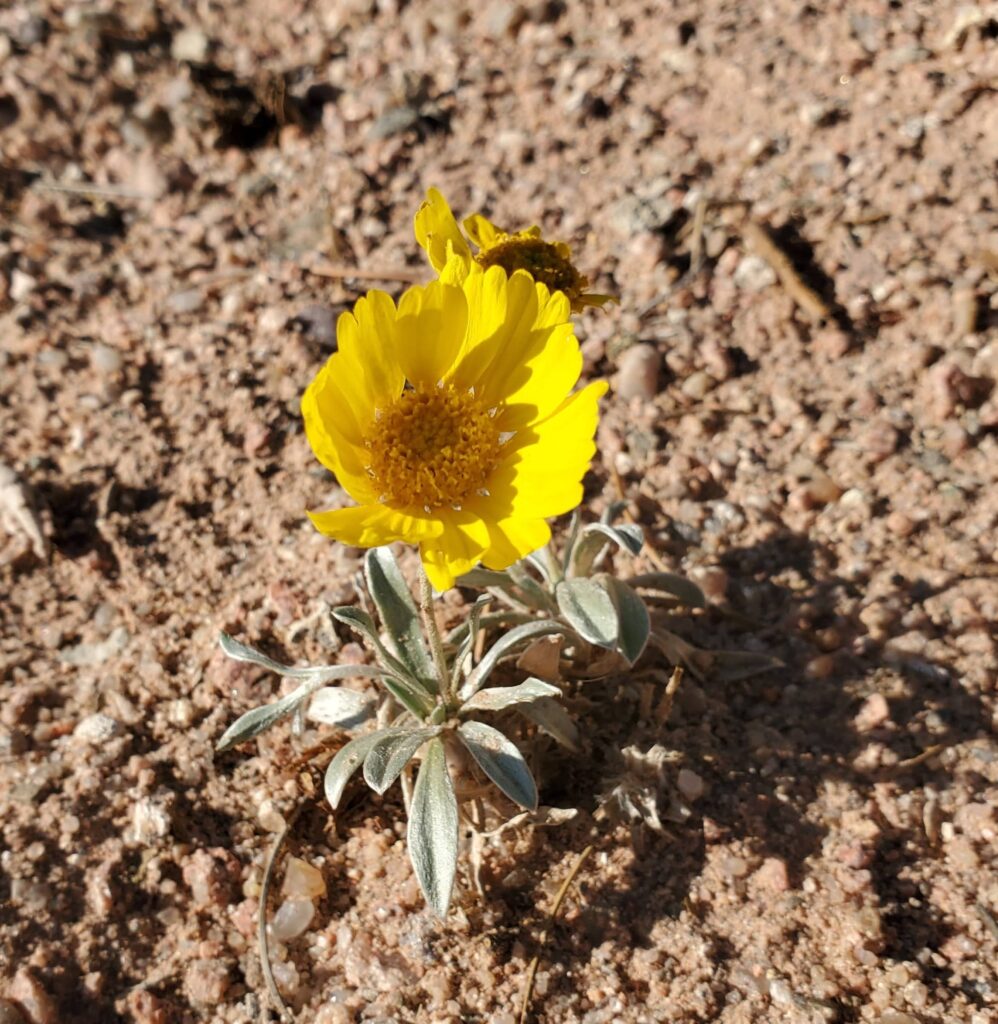
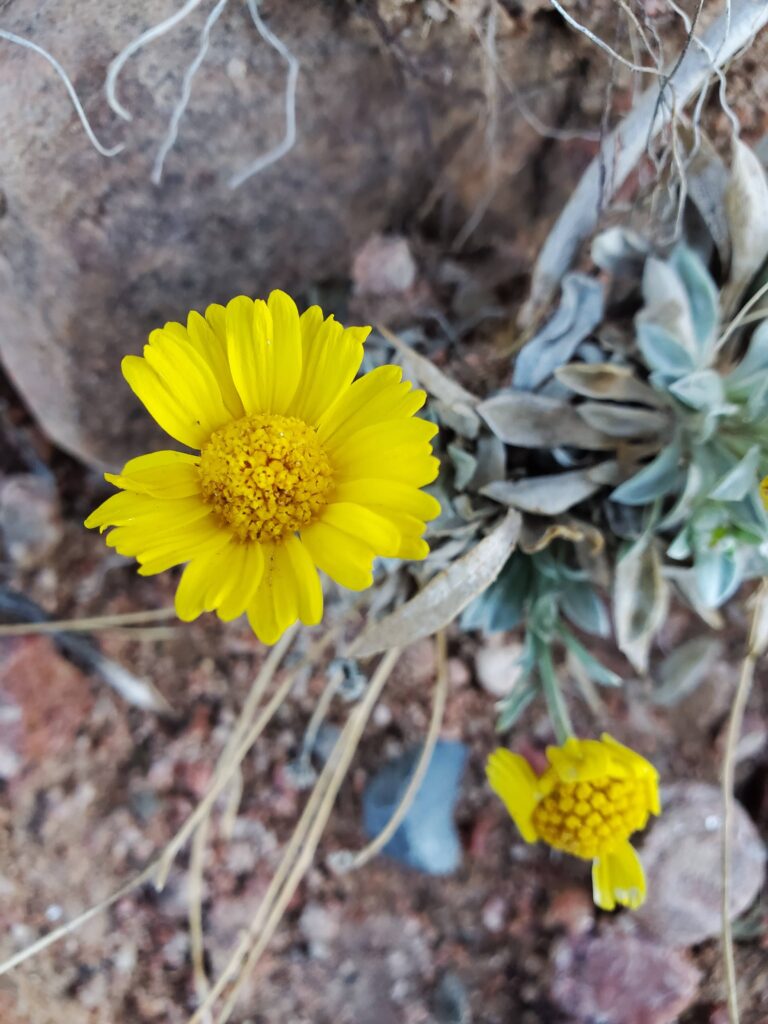
You know her from your spring and summer hikes, the golden yellow flowers dotting the landscapes under the bright New Mexico sun. In the right conditions, you’ll see perky sue all over Santa Fe area trails and roadsides, though rarely in rich, well-watered gardens. She’s found in open, sunny spots, often on rocky or sandy soils. Perky sue is found in a few places in the Santa Fe Botanical Garden, generally in the less-developed areas such as along the service roads. Notably, Tetraneuris argentea is a Southwest specialist, native to only New Mexico and Arizona, at elevations from 5200 to 9300 feet (1590 to 2930 m).
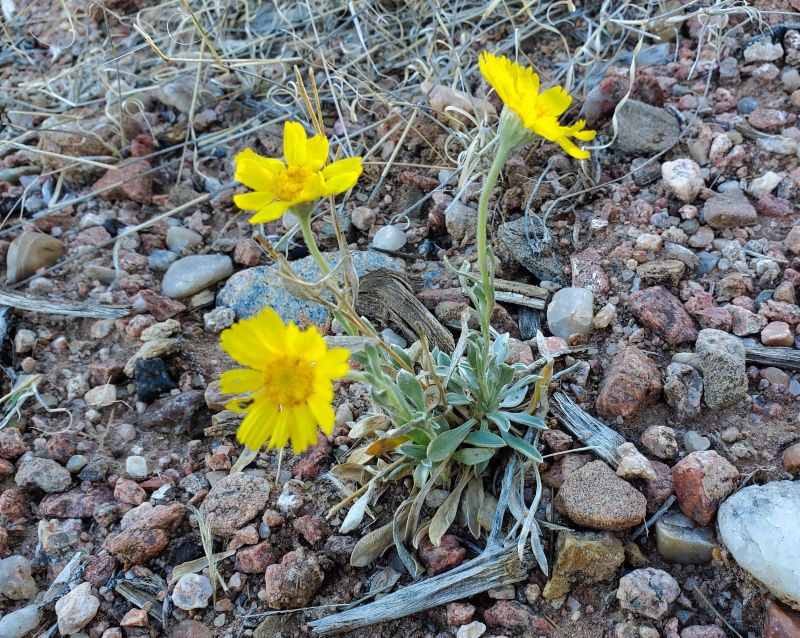
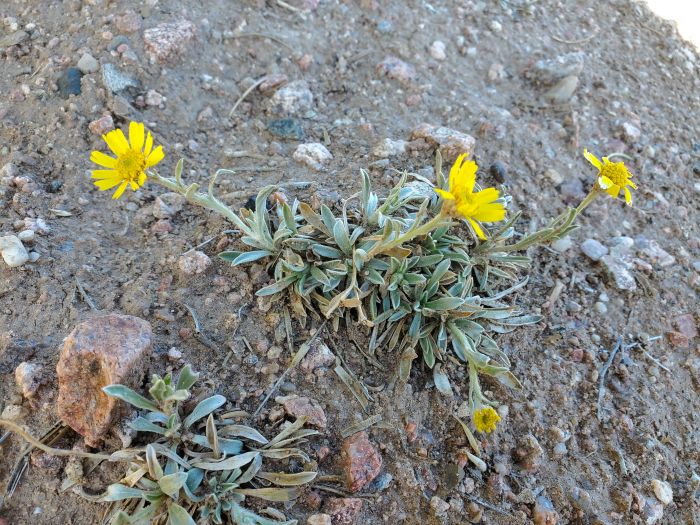
This dainty-looking but sturdy plant hugs close to the ground, its ever-silver spoon-shaped to lance-shaped leaves shining in our adobe-brown soils.
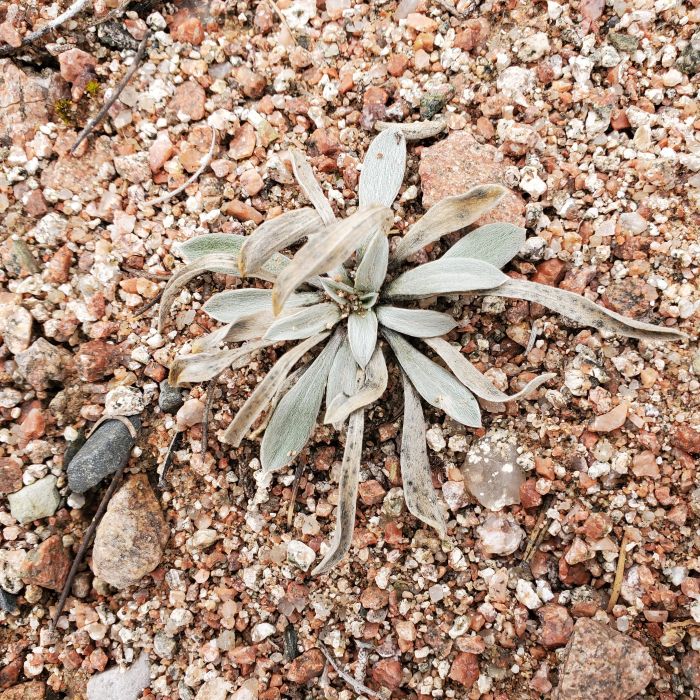
The plant is typically three to six inches (7 to 15 cm) across and three to eight inches (7 to 20 cm) tall, although some older, vigorous specimens can be twice that size or more. Younger plants may produce just two or three flowering stems, while the larger older plants can produce a dozen or more blossoms, blooming over several weeks.
If you’ve been following perky sue for a while, you may have noticed the name change from Hymenoxys to Tetraneuris. Publications in 1981 (Parker, K.F.) and 1994 (Bierner) began suggesting reclassification. If you wish to go even deeper into the taxonomy, see Bierner and Turner 2003 Taxonomy of Tetraneuris. And for the taxonomic curious, look at the family to which perky sue belongs, the Asteraceae. A gigantic plant family, the sunflowers (Asteraceae) have long provided for human needs both medicinal and dietary. Perky sue shares the gift of her golden petals.
The plant’s typical composite flower heads are about 3/4” (2 cm) wide, with 8-14 yellow ray flowers with three teeth and four nerves (“Tetra-neuris”) running along each petal. On closer inspection you will see strigose (hairy) basal leaves, with leaves present on the stem as well. Peek even closer, under the flower, and see the phyllaries, also hairy. Compare to two similar species in the genus Tetraneuris: T. acaulis and T. ivesiana. All three have yellow corollas (flowers), all vary in height, and all occur throughout northern New Mexico. Note that T. ivesiana leaves are not hairy and perky sue leaves are. And T. acaulis has no leaves on the flower stem. Checking these few traits against one another will help determine if you are indeed looking at perky sue or one of her look-alike cousins.
Those hairy leaf surfaces reflect sunlight, giving the leaf its silvery look (“argentea”) and protecting the plant from burning, surface moisture evaporation, and freezing. The plant seems relatively unphased by weather variables although we have noticed the first flowers were much later this year after a very warm, dry winter.
Tetraneuris argentea is an important early source of pollen and nectar for native bees, wasps, flies, and butterflies. The plant is also one of the life medicines of the Navajo, used for medicine for both the body and spirit. Perky sue has been used for eczema, injuries, gastrointestinal problems and heartburn. However, its best use may be to cheer us all with her bright, happy flowers every spring, and after the summer rains.
Plant her in your yard, admire her in someone else’s. Think about our native wildflowers and enjoy their company anytime you are outside.
References
Bierner, Mark W. and Turner, B.L. Taxonomy of Tetraneuris (Asteraceae: Helenieae: Tetraneurinae). Lundellia, Plant Resources Center, The University of Texas, Austin, 2003. p. 44.
Heil, et. al. “Tetraneuris argentea (A. Gray) Greene.” A. Hazelton, editor, 2017. SEINet – AZ/NM Node. Accessed April 5, 2026. Retrieved from: https://swbiodiversity.org/seinet/taxa/index.php?taxon=Tetraneuris+argentea
Miller, George Oxford. “Perky Sue: Tetraneuris Argentea.” Wildflowers of New Mexico. Web. Accessed April 4, 2026. Retrieved from: https://npsnm.org/wildflowersnm/Tetraneuris_argentea.html
Treeseed, Rebecca. “Rare Plants, Perky Sue (Tetraneuris argentea).” Treeseeddreaming. May 10, 2016. Web. Accessed April 4, 2006. Retrieved from: https://treeseeddreaming.wordpress.com/2016/05/10/rare-plants-perky-sue-tetraneuris-argentea/
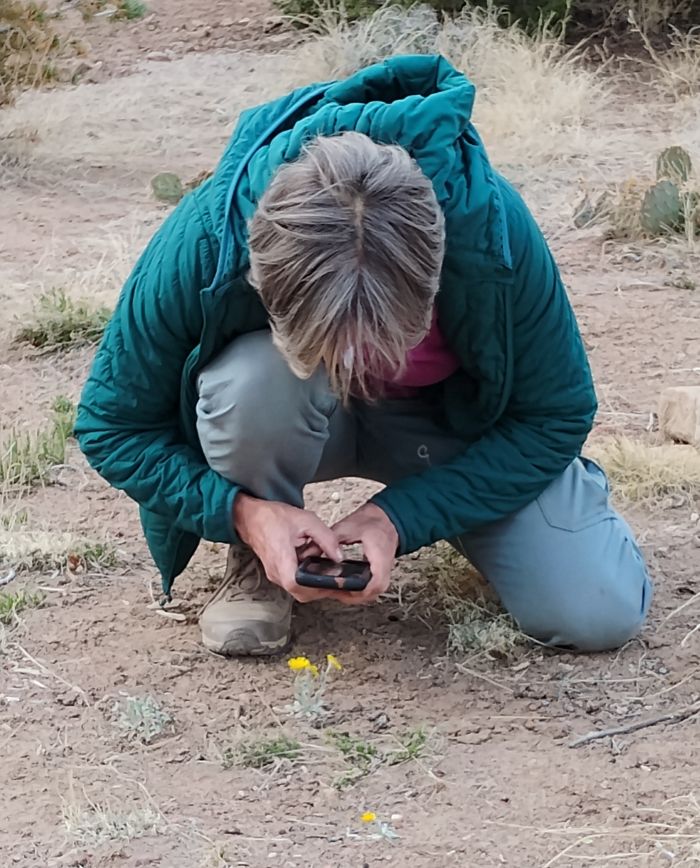
Linda Churchill botanizing/photographing the perky sue. Photo by Frank Morbillo.