
Unveiling Nitops pallipennis: A Tiny Beetle with a Subtle Presence
Blog by Rosy Link
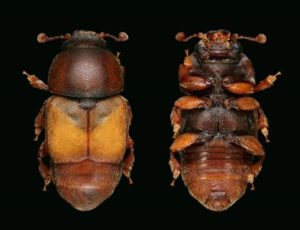
Sap Beetle Photo credit DiLorenzo
When you think of pollinators, our minds often go to bees, butterflies or moths, but did you know that beetles can be pollinators too? This time of year you might see small brown and yellow beetles on the flowers of cacti.
About 2.5-5 mm long, these tiny pollinators are called Nitops pallipennis, the pale-winged sap beetle, and are a species in the family Nitidulidae, commonly known as sap beetles. This family includes small to medium-sized beetles often found in association with decaying fruit, fermenting sap, fungi, or flowers.
The species name pallipennis derives from Latin: pallidus meaning “pale,” referring to the pale-colored elytra (wing covers) of the beetle. This muted coloration helps it blend into its surroundings, offering some protection from predators.
Adult beetles visit cacti flowers to eat part of the flower including the petals, pollen and ovaries and to lay their eggs on the flowers. After about 14-16 days the eggs hatch into small larvae, or grubs, which eat the petals and protein rich pollen of the cactus flowers and then pupate, emerging as adults. By visiting multiple locations, the beetles inadvertently move pollen from flower to flower. They have been reported in New Mexico in June and July.
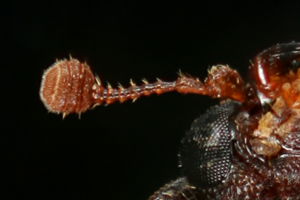 Have a close look at the club-shaped antennae: they have little knobs on the ends that provide more surface area for fine hairs which smell and sense the beetles’ surroundings.
Beetles are known to have been some of the first insects to pollinate flowers and are still at it today. Some have called their pollination style “mess and soil” because they tend to be a little rough with the blossoms as they chew their way through petals and anthers, but they are still effective pollinators. Next time you see a bright cactus flower, stop and look for the pale winged sap beetle!
Sources:
DiLorenzo, C.L., G.S. Powell, A.R. Cline, and J.V. McHugh (2021) Carpophiline-ID, a taxonomic web resource for the identification of Carpophilinae (Nitidulidae) of eastern North America. (vers. 01.19.2021) University of Georgia, retrieved from https://site.caes.uga.edu/carpophiline-id/
https://bugguide.net/ Iowa State University