
By Kayleigh Warren
This May, SFBG Director of Science and Conservation Cristina Salvador and Jill and Stanley Jankowski Science and Conservation intern Kayleigh Warren joined the New Mexico Energy, Minerals and Nature Resources Department’s Endangered Plant Botany Program staff, Erika Rowe and Katie Kline, for two rare plant surveys in the Four Corners Area. These surveys focused on assessing populations of Pediocactus knowltonii (Knowlton’s cactus) and Astragalus oocalycis (Arborales milkvetch).
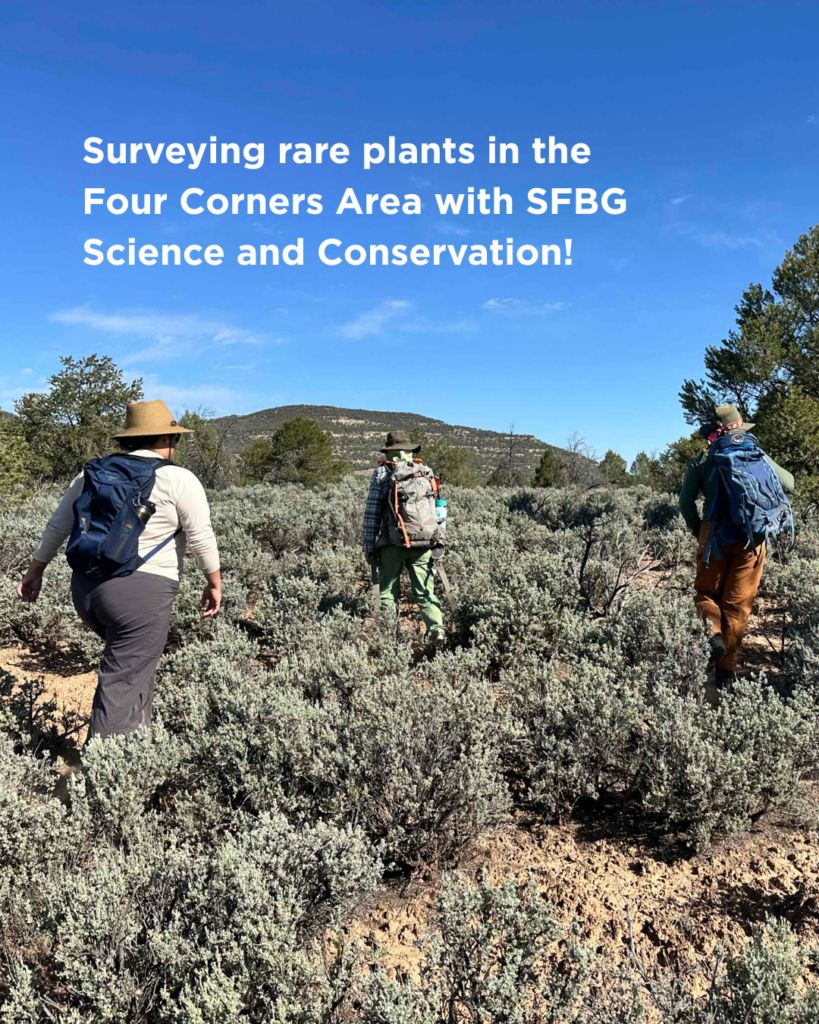
SFBG Science and Conservation staff and botanists from the New Mexico New Mexico Energy, Minerals, and Natural Resource Department hiking out for fieldwork. (Photo: Cristina Salvador)
Knowlton’s cactus is a federally-listed endangered species, and one of most rare cacti in the United States. Because of this, it is a priority species for numerous conservation agencies who are committed to saving the Knowlton’s cactus and assisting in its recovery. Both Knowlton’s cactus and Arborales milkvetch’s rarity is partially due to their limitation to specific soil types, which also happen to be areas of high activity for oil and gas development. This cactus has survived many challenges since it was first described in the 1950s. Once abundant within its habitat, Knowlton’s cactus was impacted by intensive poaching which brought this species to near extinction. Since then, conservation efforts have helped to stabilize the remaining populations and grow our understanding of this tiny cacti’s needs, but it continues to require our advocacy and active protection.
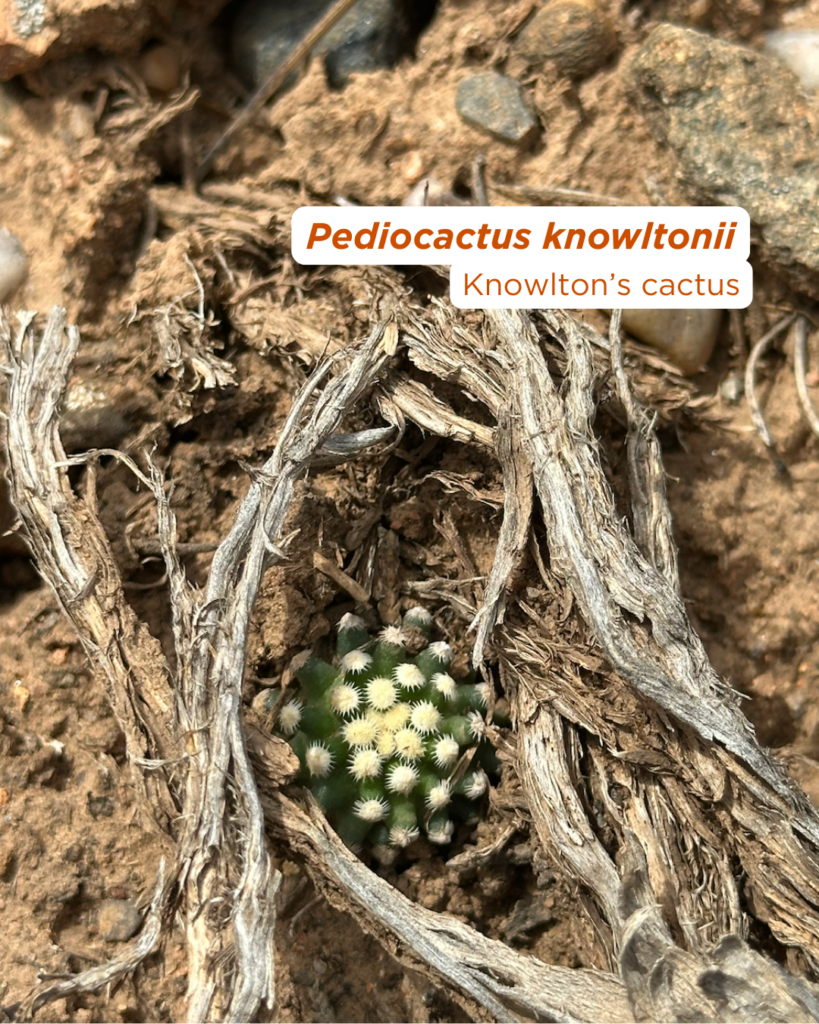
Tiny, spiny Pediocactus knowltonii! (Photo: Kayleigh Warren)
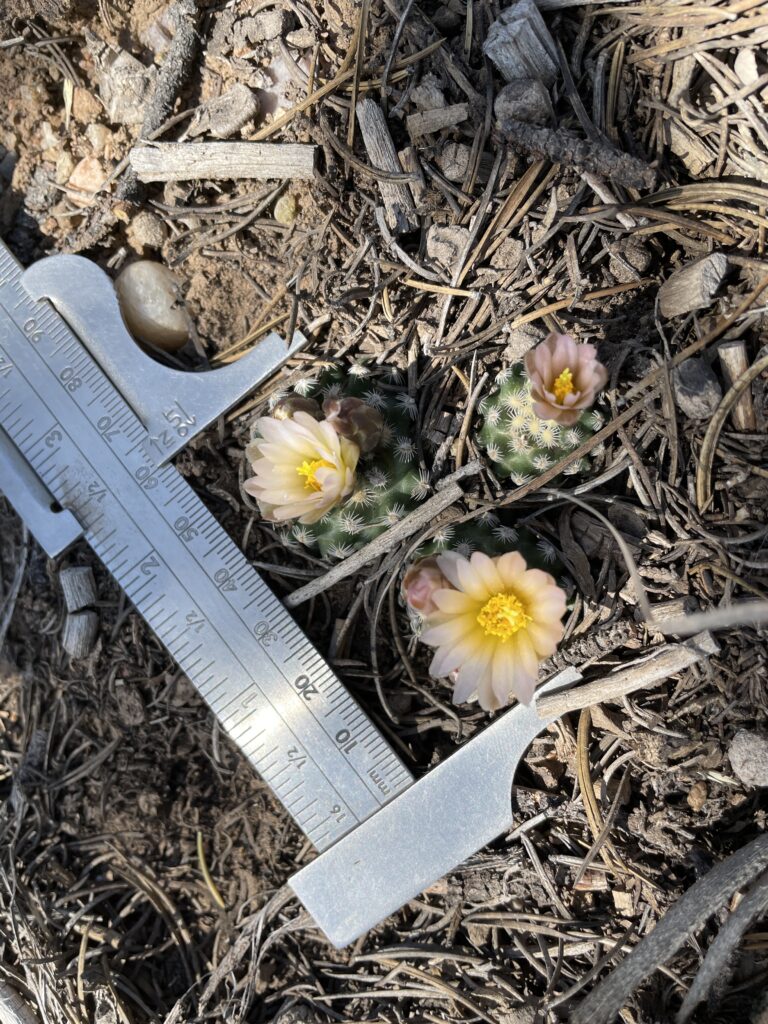
A cluster of Pediocactus knowltonii in bloom. (Photo: Erika Rowe)
Arborales milkvetch is a less well-documented species in the Four Corners Area. It is one of the plants included as a priority species to revisit for the NM Rare Plant Watch, a new citizen science initiative which provides volunteers with the opportunity to survey and collect data on certain rare plant species in our state. While surveying for Arborales milkvetch, we gained experience in utilizing the New Mexico Rare Plant Watch surveying protocols and data collection app, which will enable us to support interested volunteers wishing to receive more guidance on the process. To learn more or sign up to be part of this important effort, please visit https://nmrareplants.unm.edu/nmrareplantwatch!
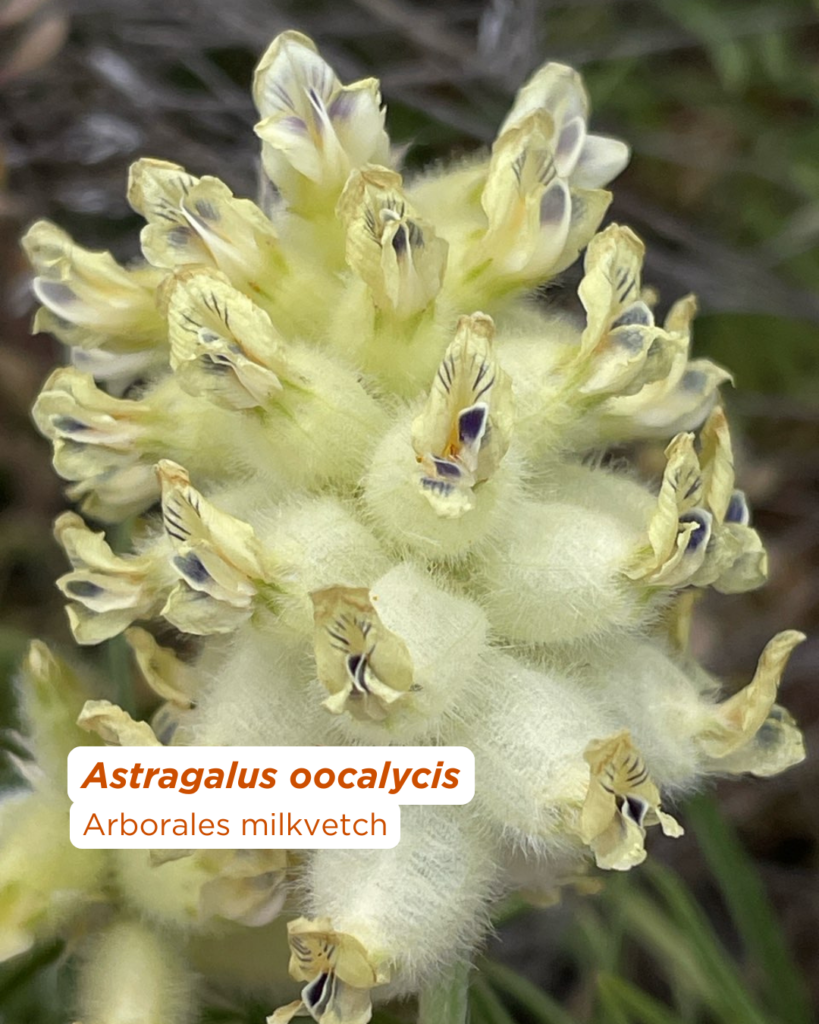
A close-up photo of an Astragalus oocalycis inflorescence. Check out the coloration! (Photo: Erika Rowe)
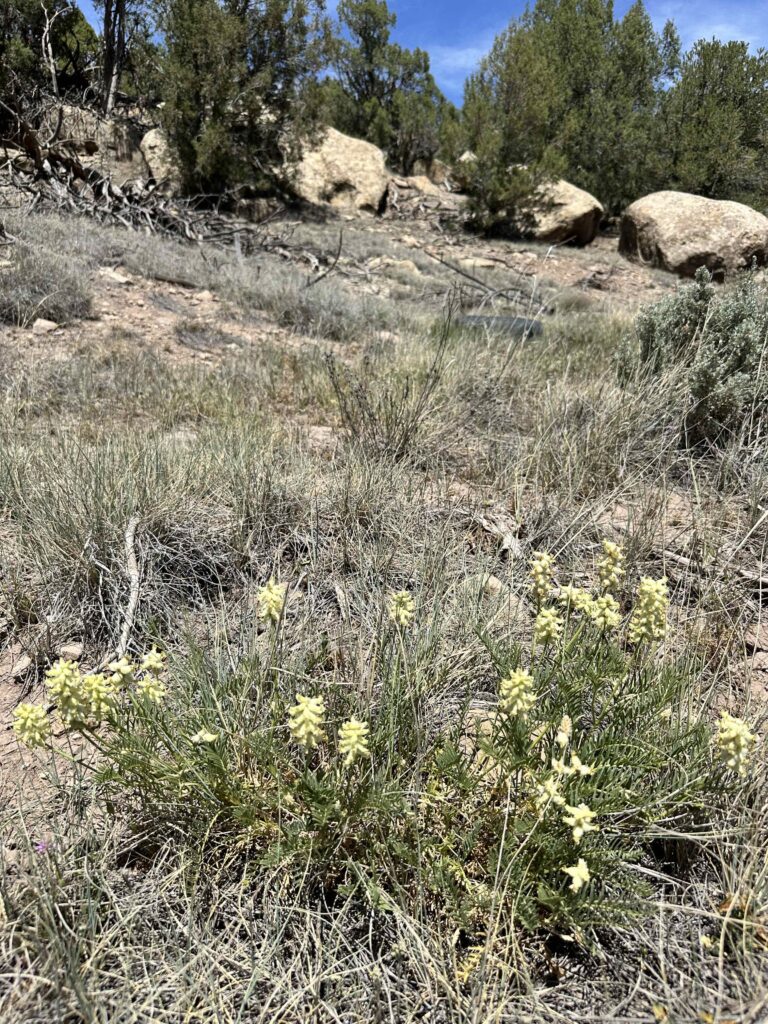
Astragalus oocalycis flowering! (Photo: Cristina Salvador)
Knowlton’s cactus and Arborales milkvetch exemplify two important conservation stories for our New Mexico rare plants. Surveys like these provide botanists with data that helps us to understand how at-risk plant species are growing, reproducing, and responding to change. They also provide an opportunity to observe conditions on the landscape adjacent to these species, in order to forecast potential threats which could impact their long-term survival.
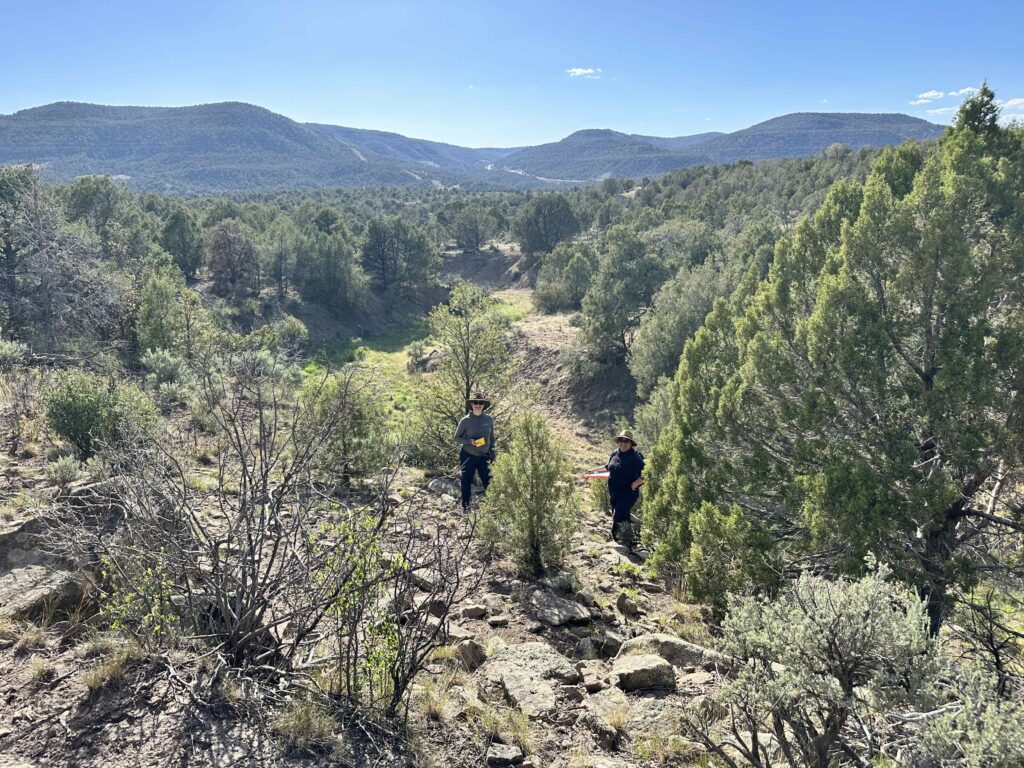
Katie Kline (EMNRD Botanist and Plant Ecologist) and Kayleigh Warren (SFBG Science and Conservation Intern) surveying in pinon-juniper woodlands. (Photo: Cristina Salvador)
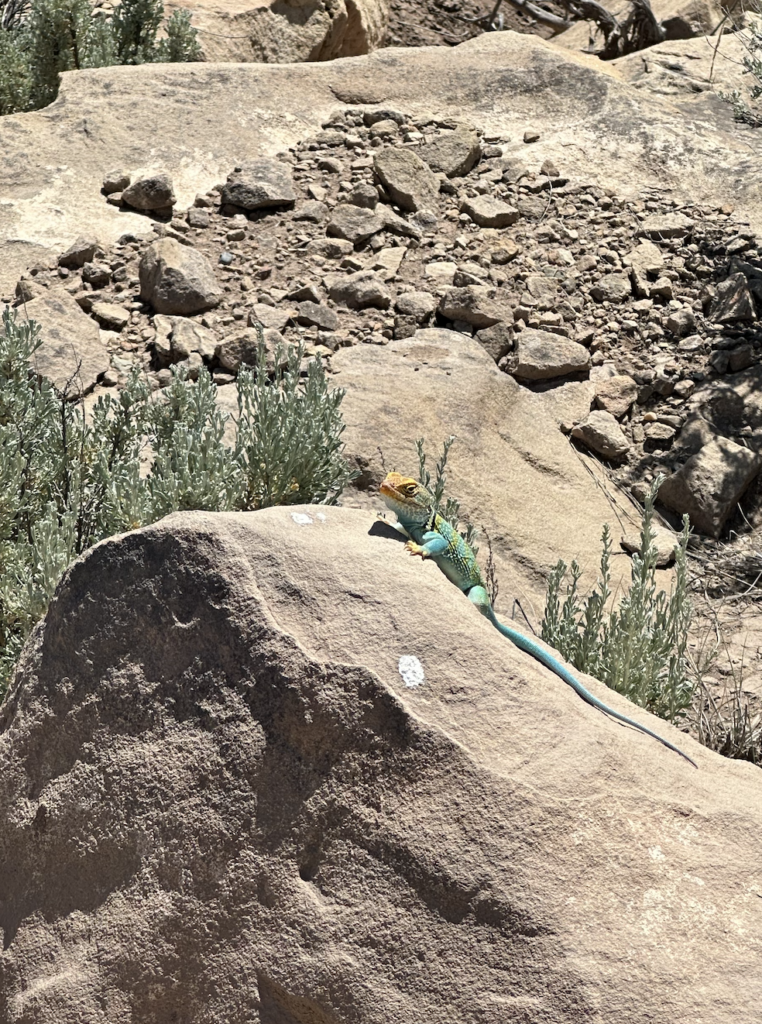
A common collared lizard (Crotaphytus collaris), supervising our survey work! (Photo: Kayleigh Warren)