How volunteers and visitors help track seasonal change and biodiversity at the Santa Fe Botanical Garden.
March 2026
Next week marks National Phenology Week (March 16–20), a celebration of the study of seasonal change in plants and animals. At the Santa Fe Botanical Garden, observing and documenting these seasonal rhythms is one way visitors, volunteers, and community partners help contribute to a broader understanding of the natural world.
These individual observations—whether noting the first bloom of a wildflower or photographing a plant during a hike—become part of larger datasets used by researchers studying ecosystems, biodiversity, and climate change across the region and beyond.
Observing the Seasons: Phenology at the Garden
Phenology is the study of recurring seasonal events in plants and animals, such as when plants leaf out, flowers bloom, fruits ripen, or birds migrate. Because these events are closely linked to temperature, precipitation, and other environmental conditions, tracking them over time helps scientists understand how ecosystems respond to changing climate patterns.
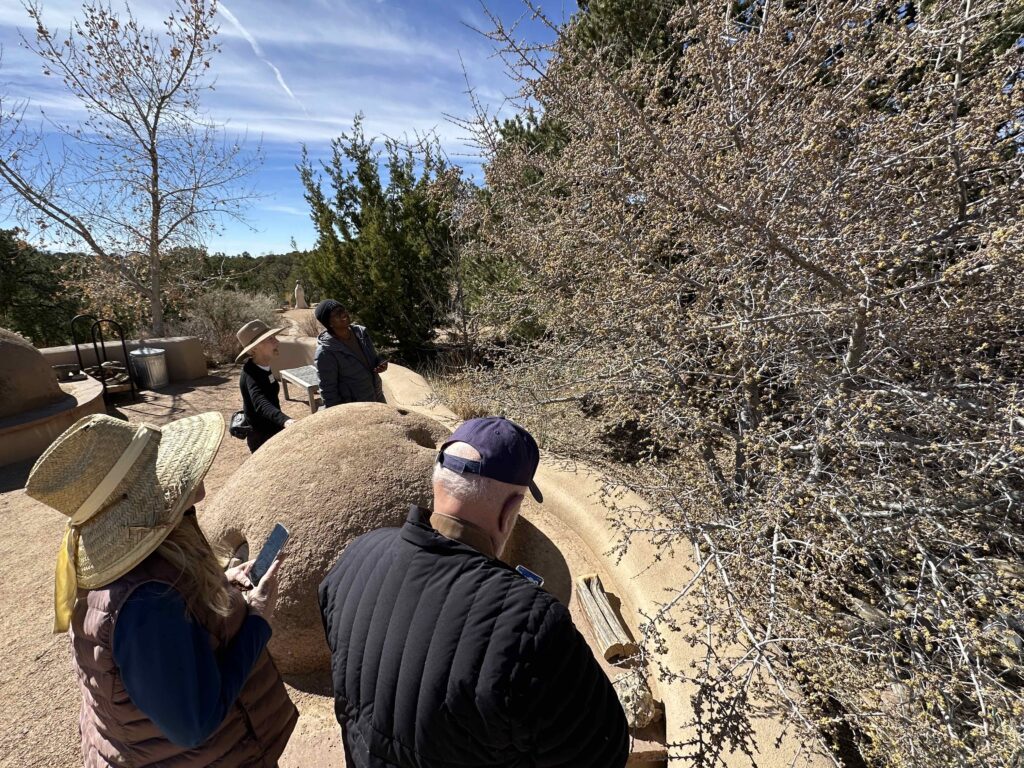
Master Naturalist Interns tracking first flowers of Shepherdia argentea (silver buffaloberry) in the Garden on Feb. 27, 2026.
Santa Fe Botanical Garden contributes phenology observations through Nature’s Notebook, a nationwide community science program coordinated by the USA National Phenology Network (USA-NPN). Data collected by volunteers here in Santa Fe becomes part of a growing national dataset used by scientists studying ecological change.
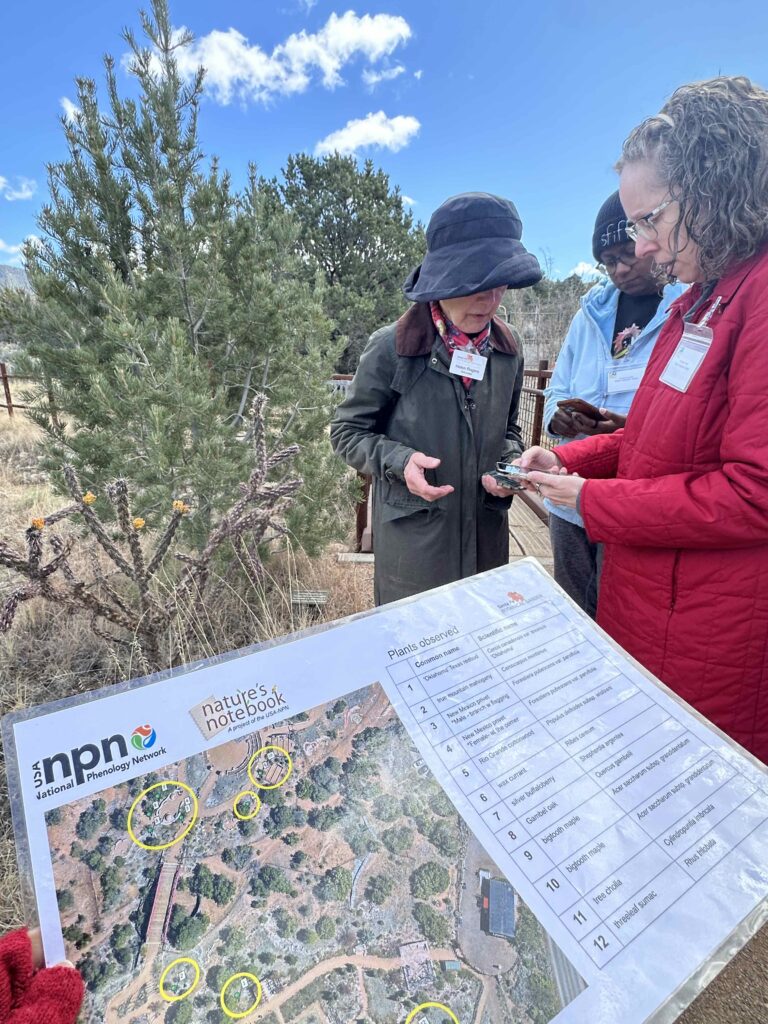
Nature’s Notebook training with Master Naturalists.
Our monitoring efforts are part of the Rio Grande Phenology Trail, a network of observation sites along the Rio Grande that collectively document seasonal changes across the Southwest.
To mark National Phenology Week, the USA-NPN will host a webinar on March 16 titled Watching Plants, Witnessing Change. In this presentation, USA-NPN Director Theresa Crimmins will discuss patterns emerging from phenology observations collected throughout the Southwest, including insights from the long-running Local Phenology Program at the ABQ BioPark.
Volunteers and the Master Naturalist Program
Many of the phenology observations recorded at the Garden are collected by Northern New Mexico Master Naturalist Interns who volunteer their time to help build long-term records of seasonal plant activity.
 The Northern New Mexico Master Naturalist Program, established in 2018, is hosted collaboratively by the Santa Fe Botanical Garden, the Randall Davey Audubon Center and Sanctuary, and the Santa Fe County Open Space, Trails, and Parks Program. The 13-week course introduces participants to the ecology of Northern New Mexico through weekly lessons and field experiences designed to develop observation skills and deepen ecological knowledge.
The program culminates with a focus on environmental stewardship, with the goal of building a network of informed community members who share a love of the natural world and contribute their skills and time to conservation efforts throughout the region.
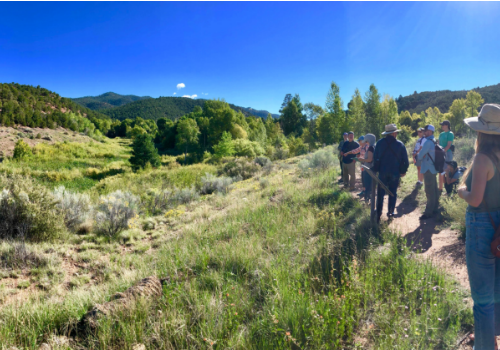
Northern New Mexico Master Naturalist Program
Documenting Biodiversity with iNaturalist
Phenology is just one form of community science happening at the Garden.
Visitors and volunteers also contribute to our Santa Fe Botanical Garden Biodiversity Project on iNaturalist, where observations of plants, insects, birds, and other organisms help us document the diversity of life present at the Garden.
Soon, the Garden will also launch the New Mexico Yucca BioBlitz, a year-long community science project led by the Santa Fe Botanical Garden to document yucca species across the state using iNaturalist. Yuccas are iconic plants of the Southwest and play important ecological roles, supporting specialized pollinators and wildlife. By gathering observations from across New Mexico, this project will help build a clearer picture of where different yucca species occur and how they are responding to environmental conditions.
Together, these community science efforts demonstrate how individual observations can contribute to regional, national, and even global scientific understanding.
How to Get Involved
Community science is open to everyone—from experienced naturalists to curious beginners. Here are a few ways you can participate:
Record Nature Observations with iNaturalist
Take photos of plants, insects, birds, and other organisms and upload them to iNaturalist to contribute to biodiversity research and help document species in the Garden and across New Mexico.
Participate in Nature’s Notebook
Help track seasonal changes in plants and animals by recording observations for the national phenology database.
Become a Northern New Mexico Master Naturalist
Join a community of learners and volunteers through this regional training program focused on the ecology of Northern New Mexico.
Support science and conservation programs by volunteering with the Santa Fe Botanical Garden.
Every observation—no matter how small—helps scientists better understand the changing natural world around us.
-
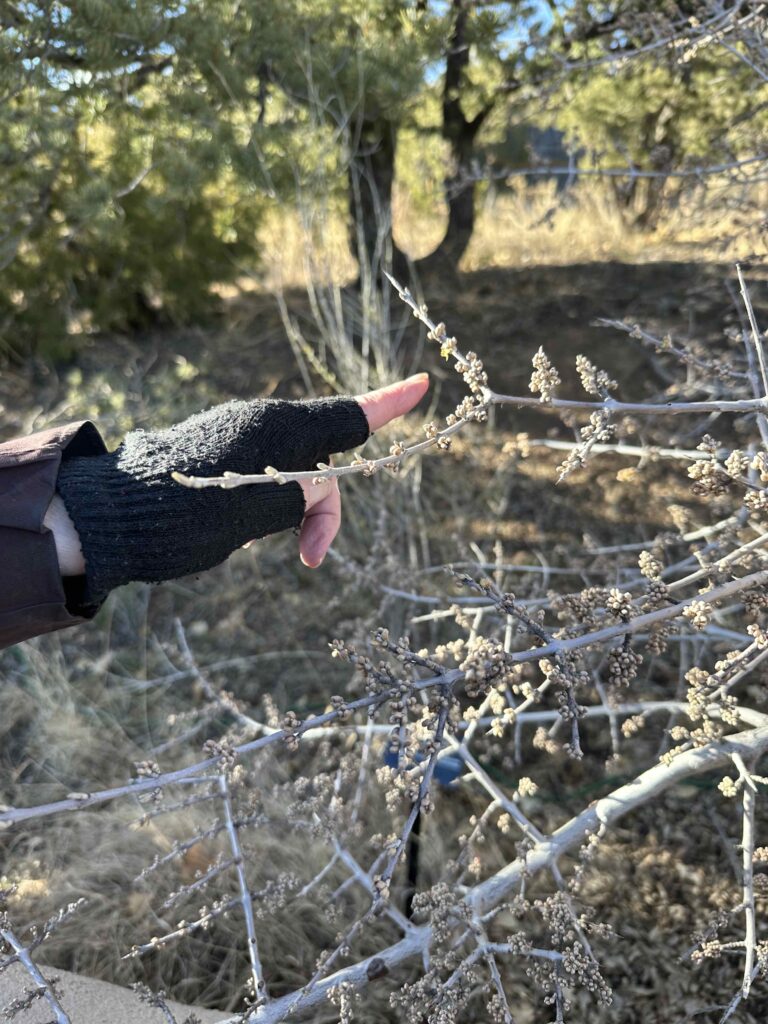
- Noticing first flowers on Feb. 19, 2026 of Shepherdia argentea.
-
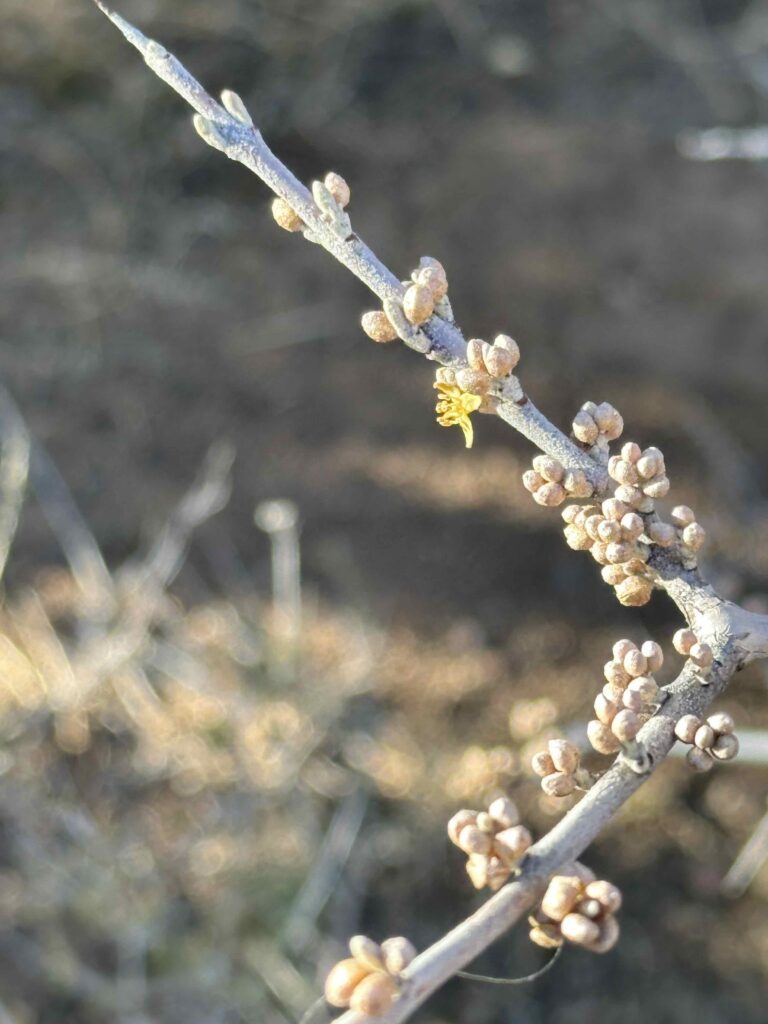
- Flower up close.